Grok takes the lead on quality and value.
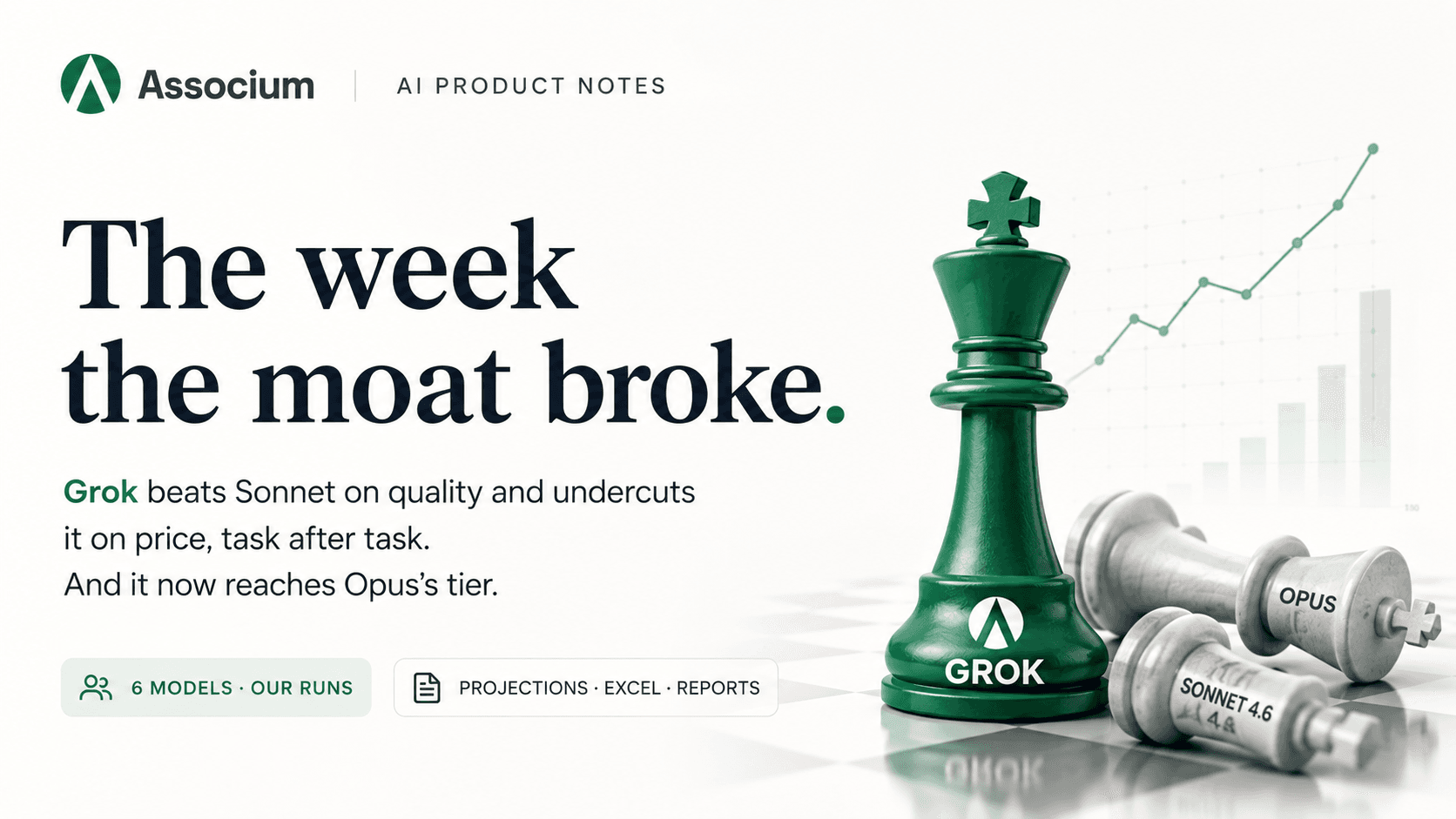
Grok takes the lead on quality and value.
A few days ago I wrote that Anthropic owned serious work. That was not a flourish. We are a bootstrapped startup. We hold OpenAI credits. We hold Google credits. They mostly sit unused while we write Anthropic a real cheque every month. On the work our customers pay for (institutional Excel models, research reports, IC memos), the gap was wide enough that free credits elsewhere were not a reason to switch. They were a reason to feel stuck. Then two things happened in one week.
𝗪𝗵𝗮𝘁 𝗰𝗵𝗮𝗻𝗴𝗲𝗱
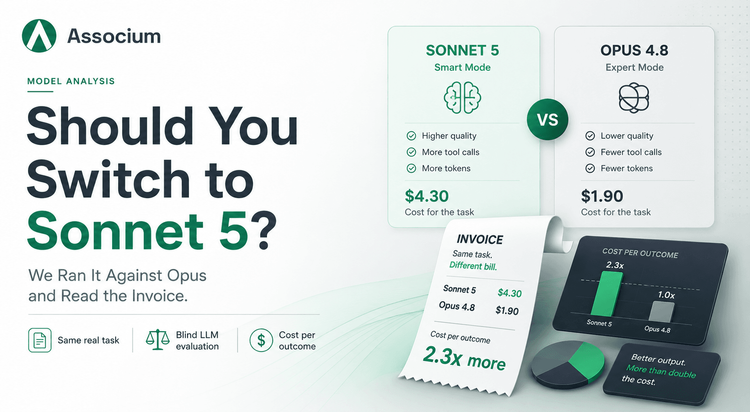
First, Anthropic shipped Sonnet 5. In our view, one of their weakest releases in a long time. It felt less like a model upgrade and more like a price increase dressed as one. The incumbent did not widen its lead. It invited a look elsewhere. Second, xAI shipped Grok. The performance genuinely surprised us. This post is about Grok, because Grok is the model that changed how we think about our stack.
𝗛𝗼𝘄 𝘄𝗲 𝘁𝗲𝘀𝘁𝗲𝗱
We do not care about leaderboard charts. We care about the four things our platform does all day: research, financial projections, Excel generation, and professional reports. We ran the same workloads across six models (MiniMax M3, Kimi 2.7 Code, Gemini 3.1 Pro, Grok, Sonnet 4.6, and Opus) with identical prompts, tools, and grading rubric. One name you will not see in any table below: 𝗚𝗲𝗺𝗶𝗻𝗶 𝟯.𝟭 𝗣𝗿𝗼. We tested it. On knowledge work it scored below MiniMax M3, under the open-source floor. The headline: 𝗚𝗿𝗼𝗸 𝗯𝗲𝗮𝘁𝘀 𝗦𝗼𝗻𝗻𝗲𝘁 𝟰.𝟲 𝗼𝗻 𝗾𝘂𝗮𝗹𝗶𝘁𝘆 𝗮𝗻𝗱 𝗰𝗼𝘀𝘁𝘀 𝘁𝗵𝗲 𝘀𝗮𝗺𝗲 𝗼𝗿 𝗹𝗲𝘀𝘀, 𝗼𝗻 𝗲𝘃𝗲𝗿𝘆 𝘁𝗮𝘀𝗸 𝘄𝗲 𝗿𝗮𝗻.
𝗧𝗵𝗲 𝗼𝗻𝗲-𝗹𝗶𝗻𝗲 𝘀𝗰𝗼𝗿𝗲𝗰𝗮𝗿𝗱 · 𝗚𝗿𝗼𝗸 𝘃𝘀 𝗦𝗼𝗻𝗻𝗲𝘁 𝟰.𝟲

Higher quality. Equal or lower cost. That is the whole argument.
𝟬𝟭 · 𝗙𝗶𝗻𝗮𝗻𝗰𝗶𝗮𝗹 𝗽𝗿𝗼𝗷𝗲𝗰𝘁𝗶𝗼𝗻𝘀
Grok tops the field. Above Opus. At Sonnet's price.
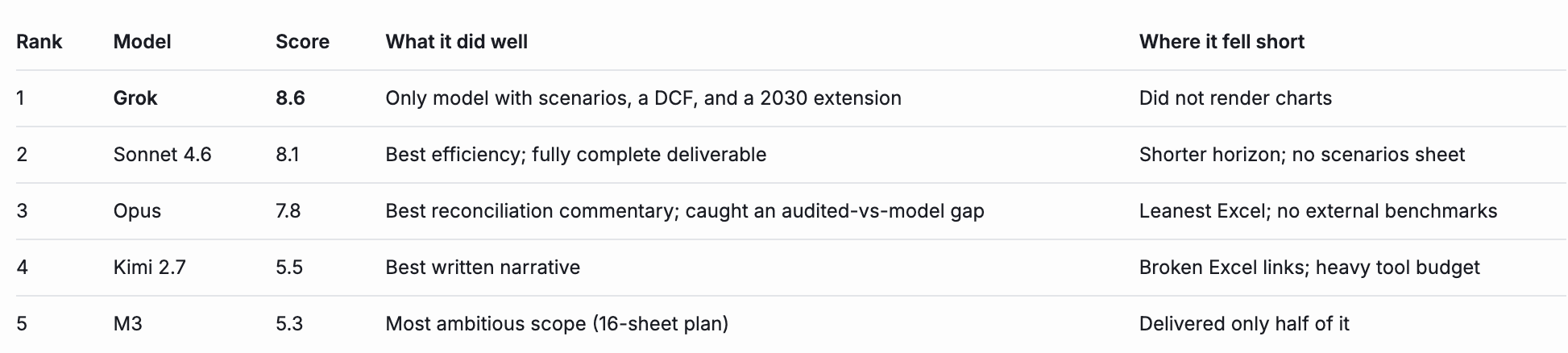
Grok tops the field. Above Opus. At Sonnet's price.
Attribute by attribute, Grok is the better analyst. Clean 9s on depth, completeness, Excel quality, accuracy, scenarios, and market context. The things that decide whether a model is 𝘳𝘪𝘨𝘩𝘵. The one column where Sonnet leads needs a caveat: visualisations, 9 to Grok's 3. That is not a capability gap. Sonnet chose to render charts on this run and Grok did not attempt them. It is a default-behaviour quirk we can prompt around in a line, not a ceiling on what Grok produces. Set it aside and Sonnet's remaining edges are a single point on clarity and deliverable completeness. Rounding error against Grok's sweep. Both tied on efficiency at 9. Spend was effectively identical: 22 credits for Grok, 21 for Sonnet. Better output, no price penalty.
𝟬𝟮 · 𝗣𝗿𝗼𝗳𝗲𝘀𝘀𝗶𝗼𝗻𝗮𝗹 𝗿𝗲𝗽𝗼𝗿𝘁𝘀
This is the workload that reframed our whole stack. Same institutional report brief. Four models. Seven weighted dimensions, graded against the actual filings.
𝗤𝘂𝗮𝗹𝗶𝘁𝘆 𝗹𝗮𝗱𝗱𝗲𝗿
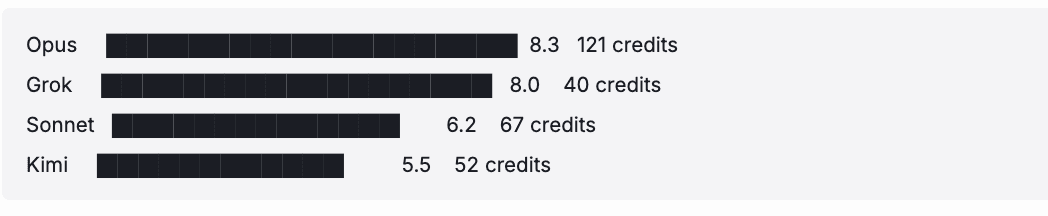
Grok delivers 96% of Opus quality at one third of the spend. Roughly 5 credits per quality point for Grok. Nearly 15 for Opus.
𝗪𝗵𝗲𝗿𝗲 𝘁𝗵𝗲 𝗽𝗼𝗶𝗻𝘁𝘀 𝗰𝗮𝗺𝗲 𝗳𝗿𝗼𝗺
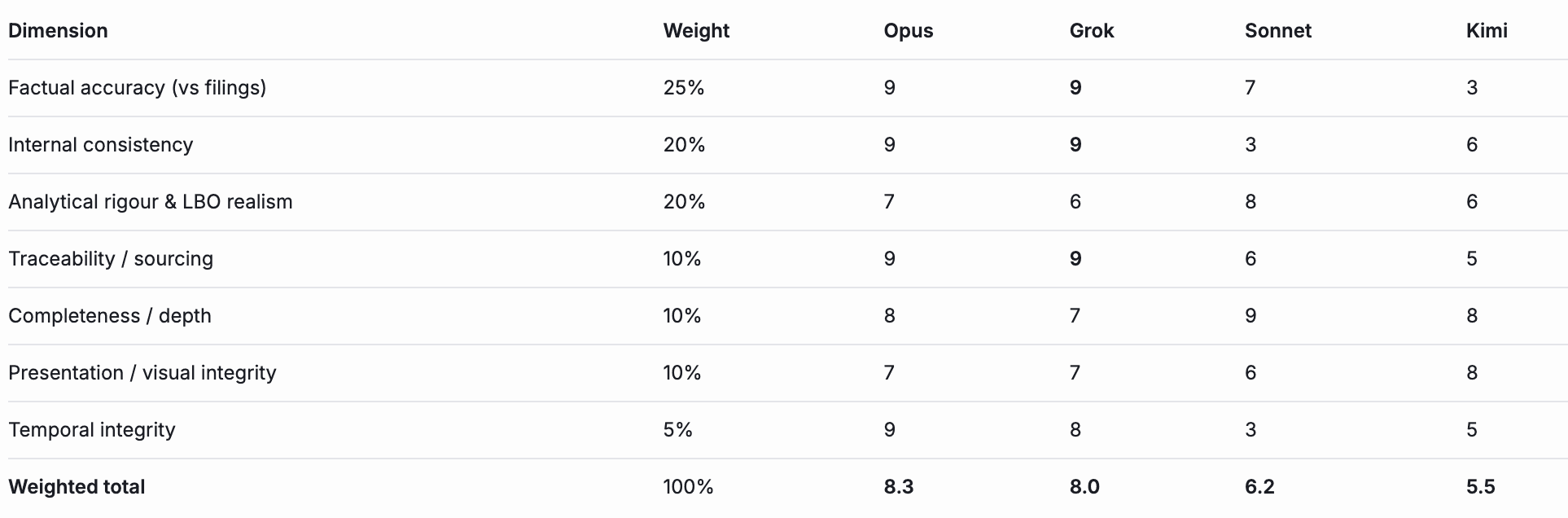
On the three dimensions that decide whether a finance report is trustworthy (factual accuracy, internal consistency, and traceability, together 55% of the weight), 𝗚𝗿𝗼𝗸 𝘁𝗶𝗲𝘀 𝗢𝗽𝘂𝘀 𝗮𝘁 𝟵, 𝟵, 𝟵. The gap is polish, not correctness. A word on our own default. Sonnet scored 𝟯 𝗼𝗻 𝗶𝗻𝘁𝗲𝗿𝗻𝗮𝗹 𝗰𝗼𝗻𝘀𝗶𝘀𝘁𝗲𝗻𝗰𝘆 and 𝟯 𝗼𝗻 𝘁𝗲𝗺𝗽𝗼𝗿𝗮𝗹 𝗶𝗻𝘁𝗲𝗴𝗿𝗶𝘁𝘆. Its headline numbers did not reconcile to its own model, and its dates did not hold. For an IC memo that is not a stylistic quibble. It is disqualifying. Grok, at 40% less cost, scored 9 and 8 on those same two dimensions. If you need Opus-grade output, Grok now gets you most of the way there for a third of the spend, and it makes Sonnet, at a higher price, look unsafe for reconciled financial work.
𝟬𝟯 · 𝗘𝘅𝗰𝗲𝗹 𝗴𝗲𝗻𝗲𝗿𝗮𝘁𝗶𝗼𝗻 On projections Grok beat the whole field. On reports it drew level with Opus. On Excel, the LBO models that are the hardest thing our platform builds, Grok simply won. We graded a single XOM LBO build on pure spreadsheet craftsmanship (structure, formula integrity, auditability, rigour, polish), deliberately excluding the realism of the deal inputs so we judged the model, not the assumptions.
𝗦𝗰𝗼𝗿𝗲 𝘃𝘀 𝗰𝗼𝘀𝘁
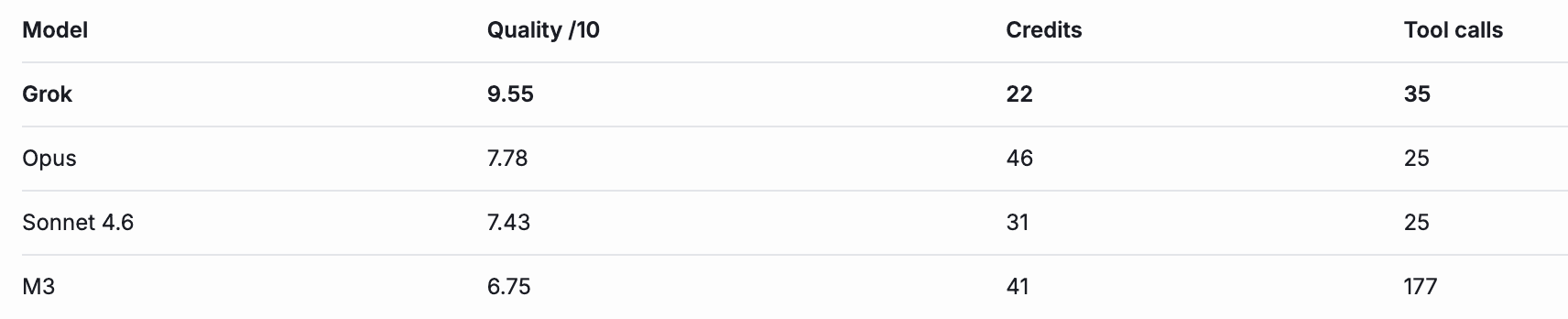
Best model. Fewest credits. Roughly half Opus's cost.
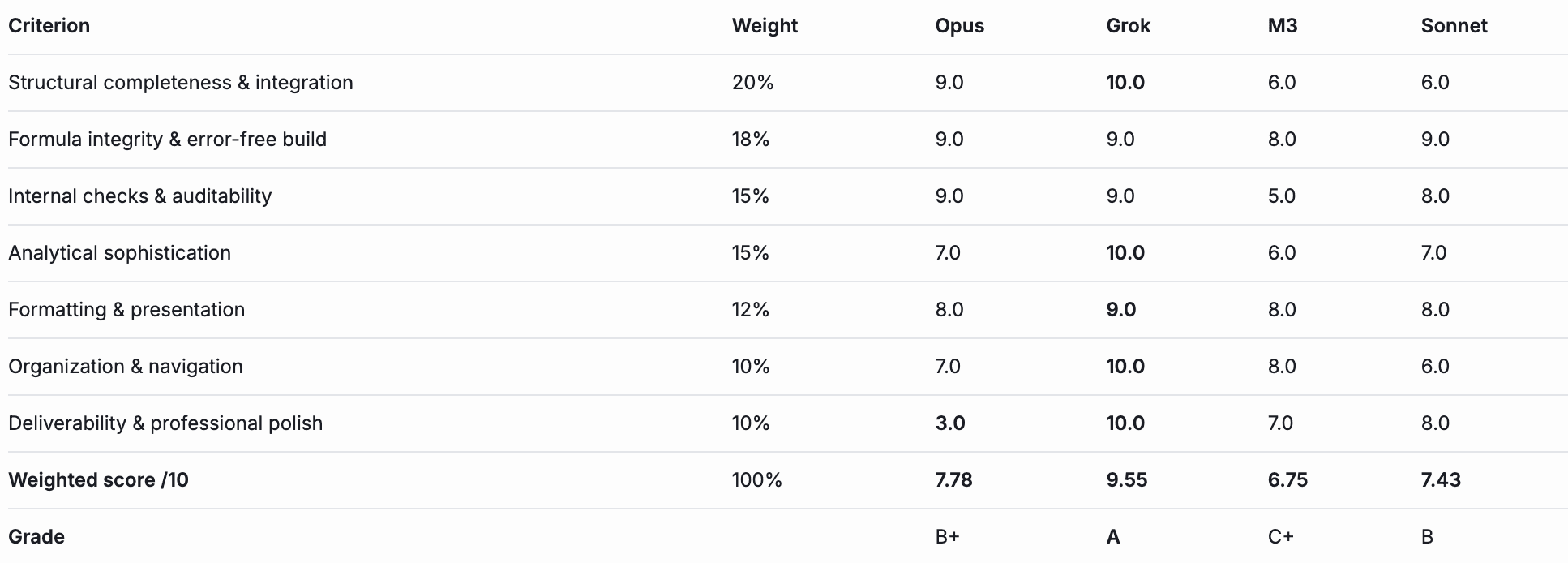
The most telling cell in the table: 𝗢𝗽𝘂𝘀 𝘀𝗰𝗼𝗿𝗲𝗱 𝟯.𝟬 𝗼𝗻 𝗱𝗲𝗹𝗶𝘃𝗲𝗿𝗮𝗯𝗶𝗹𝗶𝘁𝘆 𝗮𝗻𝗱 𝗽𝗿𝗼𝗳𝗲𝘀𝘀𝗶𝗼𝗻𝗮𝗹 𝗽𝗼𝗹𝗶𝘀𝗵. The premium model built something structurally strong that you could not hand to a client without rework. Grok scored a 𝟭𝟬. One honest note so no one cries cherry-pick: Grok made 35 tool calls to Opus's and Sonnet's 25, so it is not the most step-efficient model here. It is the most cost-efficient. Fewer credits, more calls. For a deliverable this good at this price, we will take it.
𝗪𝗵𝘆 𝗼𝗽𝗲𝗻-𝘀𝗼𝘂𝗿𝗰𝗲 𝗺𝗼𝗱𝗲𝗹𝘀 𝗳𝗮𝗹𝗹 𝗮𝗽𝗮𝗿𝘁 𝗼𝗻 𝗸𝗻𝗼𝘄𝗹𝗲𝗱𝗴𝗲 𝘄𝗼𝗿𝗸
The gap is not a rounding error. 8.6 and 8.1 for the frontier models on projections. 5.5 and 5.3 for the open challengers. M3 did not fail for lack of ambition. It planned a 16-sheet model, then delivered half of it while burning 81 tool calls. On Excel it got worse: 𝟭𝟳𝟳 𝘁𝗼𝗼𝗹 𝗰𝗮𝗹𝗹𝘀, five times Grok's 35, to produce a C+. Kimi 2.7 wrote the best prose of anyone and shipped an Excel file with broken links after 53 credits. These are not "not smart enough" failures. They are 𝗮𝗴𝗲𝗻𝘁𝗶𝗰 𝗿𝗲𝗹𝗶𝗮𝗯𝗶𝗹𝗶𝘁𝘆 𝗳𝗮𝗶𝗹𝘂𝗿𝗲𝘀. The models could not drive a tool loop to a finished, correct deliverable, and they stumbled on the basic version of the task, not just the hard one.
Two hypotheses, flagged as such.
𝗕𝗲𝗻𝗰𝗵-𝗺𝗮𝘅𝗶𝗻𝗴.
Open labs live and die by public leaderboards, so they optimise hard for what leaderboards measure: coding, math, one-shot reasoning. Clean, gradeable, great for a launch chart. None of it looks like knowledge work, which is messy, multi-step, tool-heavy, and only correct once a model reconciles across sheets and assembles something a human would sign.
𝗡𝗮𝗿𝗿𝗼𝘄 𝗱𝗶𝘀𝘁𝗶𝗹𝗹𝗮𝘁𝗶𝗼𝗻.
A lot of open models look distilled off frontier models on a narrow slice, mostly code. That gives you a model that codes impressively and falls off a cliff the moment the task is agentic knowledge work. A specialist wearing a generalist's marketing. The data point that reframed it for me: on a cost-adjusted basis, last year's 𝗛𝗮𝗶𝗸𝘂 𝟰.𝟱, a small, cheap, generation-old Anthropic model, still beats GLM. When a frontier lab's economy model from last year outperforms a current open-source release on the work that matters, "open source has caught up" simply is not true for knowledge work. Coding, the monetised use case, is legitimately strong. Step outside that lane and no open model comes close to even the accessible frontier tiers: GPT-5.6, or Haiku. Not the flagships. The cheap ones.
𝗪𝗵𝗮𝘁 𝗶𝘁 𝗺𝗲𝗮𝗻𝘀 For eighteen months the calculus for a serious AI product company was simple and uncomfortable: pay Anthropic, because nothing else cleared the bar for institutional output. We had alternatives on paper and no real choice in practice. Grok changes the calculus. Put plainly: 𝗚𝗿𝗼𝗸 𝗯𝗲𝗮𝘁𝘀 𝗦𝗼𝗻𝗻𝗲𝘁 𝗼𝗻 𝗾𝘂𝗮𝗹𝗶𝘁𝘆 𝗮𝗻𝗱 𝘂𝗻𝗱𝗲𝗿𝗰𝘂𝘁𝘀 𝗶𝘁 𝗼𝗻 𝗽𝗿𝗶𝗰𝗲, 𝘁𝗮𝘀𝗸 𝗮𝗳𝘁𝗲𝗿 𝘁𝗮𝘀𝗸, and it now reaches Opus's tier. It beats the premium model outright on projections and Excel, and loses reports by just 0.3 points at a third of the cost. That is not a second option to keep on the shelf. It is a credible new default for large parts of the stack. None of this means Anthropic is finished. Opus still edges the reports scorecard, but by 0.3 points at three times the price, and it lost the other two tasks. That is a very different thing from an unassailable lead. And Sonnet 4.6, our old default, is the clearest casualty. Across every task, Grok matched or beat it on quality and matched or undercut it on price. There is no workload left where reaching for Sonnet over Grok is the right call. Last week, both halves of the moat broke at once. Competition is back in the model layer, and for a company that has to earn every unit of margin, that is very good news.
𝗪𝗵𝗮𝘁'𝘀 𝗻𝗲𝘅𝘁 Next week we will run these same tasks with the new GPT models. And Associum's Smart tier will soon be powered by Grok.
--
Associum is an AI associate built for professionals in finance, consulting, and compliance. Try it at associum.ai.